Keir Starmer Steps Down as Labour Leader, Setting Off Race to Replace Him as Prime Minister
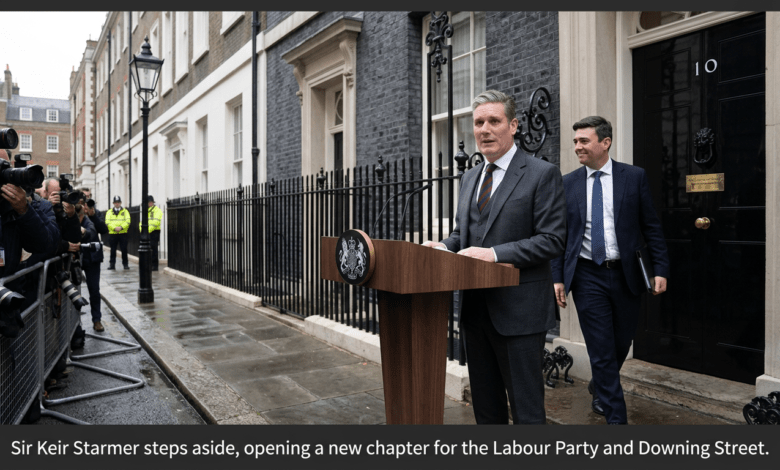
Sir Keir Starmer has confirmed he is stepping down as leader of the Labour Party, setting in motion a formal contest that will determine who leads both the party and the country. Addressing the nation from Downing Street, Starmer acknowledged that he was no longer the right person to lead Labour into the next general election and said he had personally informed the King of his intention to resign.
Starmer said he has asked Labour’s governing body to establish a clear timeline for the transition. Nominations for the leadership race will open on 9 July and close before Parliament breaks for the summer recess on 16 July. He confirmed a new leader is expected to be in place before MPs return in September, and pledged to do everything within his power to ensure a smooth and orderly handover.
Until a new leader is formally confirmed, Starmer will continue to serve as prime minister. He said he would offer his successor every possible support, noting that the incoming leader would inherit a country in stronger shape than when he took office.
With the contest now officially under way, attention has quickly turned to who will succeed him. Andy Burnham, the former Greater Manchester Mayor, is widely considered the frontrunner after his commanding victory over the Reform UK candidate in last week’s Makerfield by-election. Burnham announced on Monday that he would formally enter the race, boarding a train to London to take up his new parliamentary seat.
His campaign received an early boost when former Health Secretary Wes Streeting — previously seen as his closest rival — declared his backing for Burnham. The move effectively consolidated support behind the former mayor before the contest had even officially begun.
Speaking to reporters at Euston station, Burnham praised Starmer’s “dedication and service” but was careful not to get ahead of himself. When asked whether he would call a snap general election if he became prime minister, he deflected: “You’re jumping several hurdles ahead. My priority is to be sworn in as the MP for Makerfield.”
His official swearing-in as an MP was a charged moment. Burnham was met with loud cheers from Labour benches and light-hearted heckling from the opposition, including one MP who shouted “He’s not the messiah.” After the formalities, he joined roughly 200 Labour MPs in Westminster Hall for a group photograph.
Sources close to Burnham say he is preparing a major speech for next week in which he will lay out his economic vision, with a focus on growth and a commitment to the government’s existing fiscal rules. His allies, however, are dampening speculation about cabinet appointments. “No jobs have been given and no deals made,” one source said flatly.
Meanwhile, former Armed Forces Minister Al Carns, who has also been floated as a potential contender, told ITV’s Robert Peston on Monday evening that he was “not ready to make a decision” on whether to stand — leaving the door open without stepping through it.
The coming weeks will determine whether Burnham can convert his early momentum into a decisive lead — or whether a challenger emerges to make this a genuine contest for the soul of the Labour Party and the keys to Downing Street.